Ingredients
Method
- Prepare the potatoes: Peel the potatoes and cut them into even, 4cm chunks. Rinse them under cold running water until the water runs clear—this washes away excess starch that can make the mash gluey. Place the chunks in a large pot and cover with cold water by about 5cm. Add a generous tablespoon of salt. Cue: The water should look clear, and the potatoes will feel firm and squeaky clean.
- Cook until tender: Bring the pot to a boil over high heat, then reduce to a steady simmer. Cook for 15-20 minutes. Cue: You’ll see the water gently bubbling; the potatoes are ready when a knife slides into the centre of a chunk with absolutely no resistance, and the edges begin to look a little fluffy and break apart. The kitchen will smell of clean, starchy steam.
- Drain and dry: Drain the potatoes in a colander and let them sit for a good 3-4 minutes. Cue: You’ll see steam rising from the colander as the water evaporates. This crucial step removes excess moisture, ensuring your mash isn’t watery. The potatoes should look dry and floury on the surface.
- Warm the dairy: While the potatoes drain, place the milk, cream, bay leaf, and whole garlic cloves (if using) into a small saucepan. Warm over a low heat until it’s just steaming—do not let it boil. Cue: Small bubbles will appear around the edge of the pan, and the scent of warm milk and bay will fill the air. Remove the bay leaf and garlic cloves before using.
- Mash the potatoes: Return the dried potatoes to the warm pot (off the heat). Use a potato masher or a ricer to break them down. Start with a gentle pressing motion. Cue: You’ll hear a soft, squelching sound as the potatoes break down. The texture should be fluffy and light, with no large lumps remaining. Do not use a food processor or electric mixer—they overwork the starch and create a gluey paste.
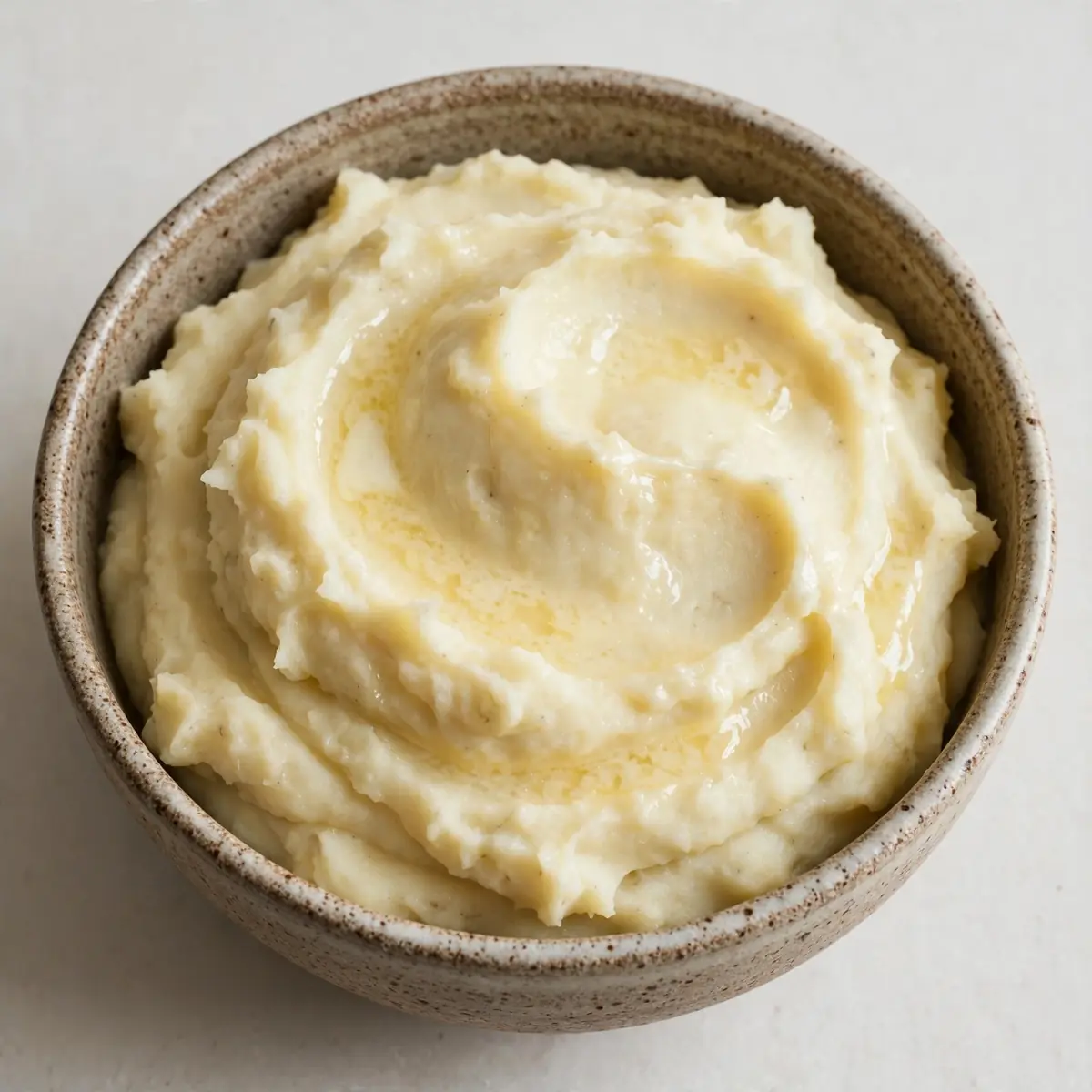
- Incorporate the butter and dairy: Add the 120g of butter in small pieces to the hot mash. Gently fold it in with a wooden spoon until it melts completely. Slowly pour in the warm milk mixture, a little at a time, folding gently after each addition. Cue: The mash will turn a pale, creamy gold. You’ll see the butter glisten, and the mixture will become looser and incredibly glossy. Stop adding liquid once it reaches a soft, spoonable consistency.
- Season and finish: Add the fine sea salt and white pepper. Taste and adjust. Cue: The mash should taste rich and savoury, with the butter and cream singing through. It should hold a soft peak when dropped from a spoon. Serve immediately, topped with an extra knob of butter and a scattering of fresh chives.
Notes
For best results, use floury potatoes like Maris Piper or King Edward. Do not overwork the mash; a potato masher or ricer is ideal. The optional bay leaf and garlic infuse the dairy for subtle aromatic notes.