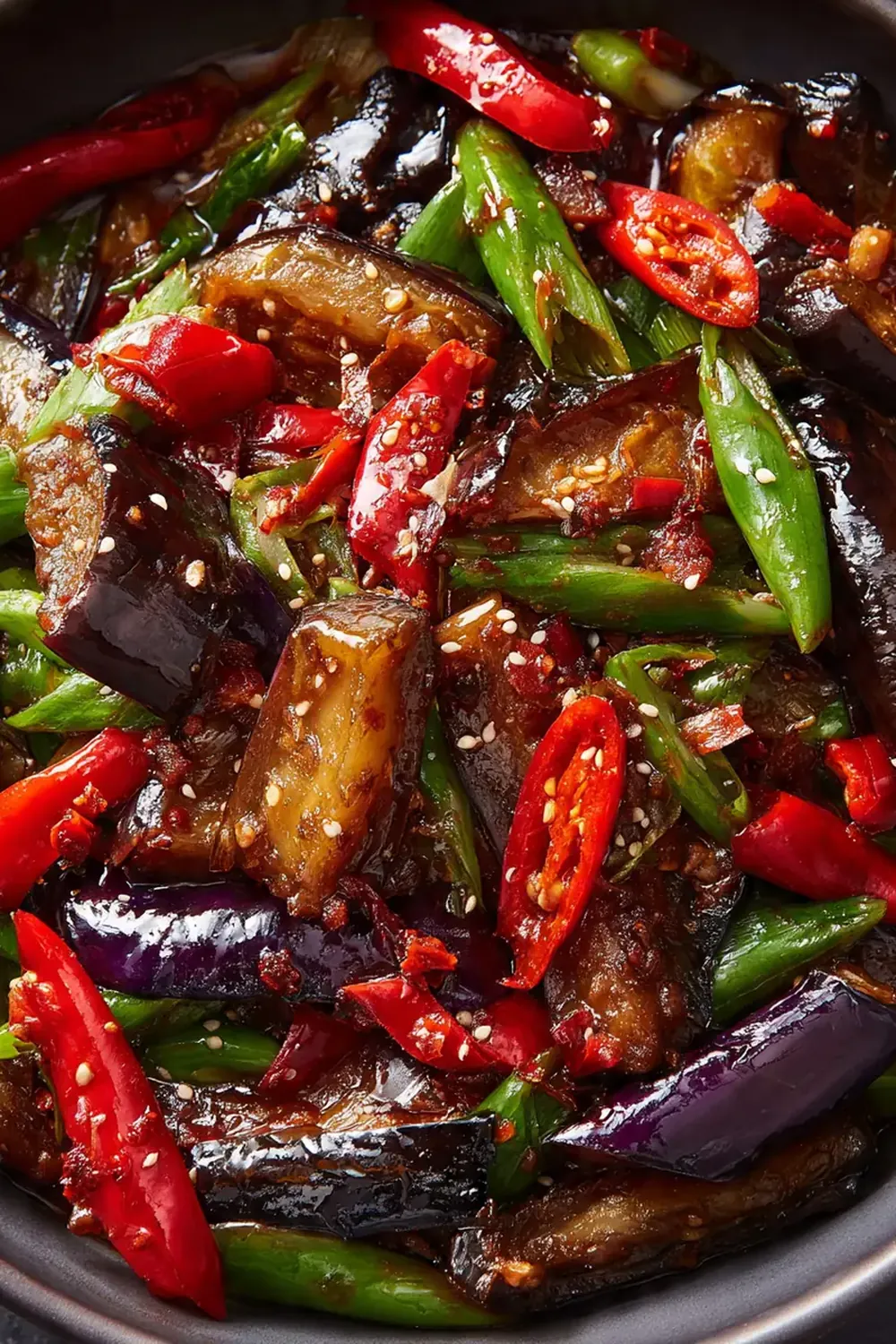
Spicy Szechuan Eggplant Stir-Fry

This Spicy Szechuan Eggplant Stir-Fry is my absolute go-to when I need something that feels like a proper restaurant meal but comes together in the time it takes to cook a pot of rice. This was inspired by a dish I had at a little restaurant in China, where the eggplant was so silky and the sauce so deeply savoury that I begged the chef for a peek into his wok. I’ve spent years perfecting my version at home, and I’m thrilled to share every detail with you today.
Recipe Overview
- Prep Time: 15 minutes
- Cook Time: 15 minutes
- Total Time: 30 minutes
- Servings: 4 as a main with rice, or 6 as a side
- Difficulty: Medium (requires attention to heat and timing)
Why You’ll Love This Spicy Szechuan Eggplant Stir-Fry
- The texture is pure magic. When cooked correctly, the eggplant becomes luxuriously soft and creamy on the inside, with a slight chew from the skin, soaking up every drop of that glossy, umami-rich sauce.
- Deep, layered flavour in under 30 minutes. By using a proper hot wok and a handful of pantry staples, we build a sauce that tastes like it’s been simmering for hours — sweet, savoury, and gently numbing from the Szechuan peppercorns.
- A brilliant way to use eggplant. If you’ve ever struggled with watery or bitter eggplant, this method teaches you how to coax out its best qualities, transforming a humble vegetable into the star of the dinner table.
- It’s endlessly adaptable. While the classic version is vegetarian, you can easily add chicken, beef, or tofu, and it plays beautifully with different levels of heat. This is my go-to recipe when I need something quick but impressive.
- Naturally impressive for guests. The glossy glaze, the fragrant steam, and the vibrant garnish make this dish look like it came from a professional kitchen — but only you will know how straightforward it was to prepare.
Ingredients You’ll Need
- 450g Chinese eggplant (or regular purple eggplant), cut into 5cm batons
- 1 tablespoon salt (for the eggplant brine)
- 3 tablespoons vegetable oil (or any neutral oil with a high smoke point)
- 3 cloves garlic, minced
- 1 tablespoon fresh ginger, finely grated
- 2 spring onions, white parts sliced, green parts reserved for garnish
- 1-2 tablespoons Szechuan doubanjiang (fermented chilli bean paste)
- 1 tablespoon Szechuan peppercorns, lightly ground
- 2 tablespoons light soy sauce
- 1 tablespoon dark soy sauce (for colour and depth)
- 2 tablespoons brown sugar (or palm sugar, grated)
- 1 tablespoon Chinkiang vinegar (black rice vinegar)
- 120ml vegetable stock (or chicken stock for a non-vegetarian version)
- 1 teaspoon cornflour mixed with 2 teaspoons water (slurry)
- 1 teaspoon sesame oil (for finishing)
- Optional: 1-2 dried red chillies, snipped into pieces, for extra heat
Tip: Chinese eggplant is ideal because it has thinner skin and fewer seeds, which means it cooks faster and turns creamier. If you can only find large globe eggplants, peel them in stripes and cut into smaller pieces to avoid bitterness.
How to Make Spicy Szechuan Eggplant Stir-Fry
- Prepare the eggplant. Toss the eggplant batons with 1 tablespoon of salt in a large bowl. Let them sit for 15 minutes. You will see beads of dark liquid form on the surface — this is the bitterness being drawn out. Rinse the eggplant thoroughly under cold water and pat completely dry with a clean tea towel. The pieces should feel dry to the touch, not slippery.
- Mix the sauce. In a small bowl, whisk together the light soy sauce, dark soy sauce, brown sugar, Chinkiang vinegar, and vegetable stock. Set it aside. The mixture will be a deep brown colour, smelling sharply of vinegar and sweet molasses. Have your cornflour slurry ready nearby.
- Heat the wok to smoking. Place your wok or largest frying pan over high heat. Add the vegetable oil and swirl to coat. When the oil is shimmering and you see the faintest wisp of smoke — that shimmering haze — add the dried chillies (if using) and Szechuan peppercorns. They will sizzle and become fragrant within 10 seconds. Do not let them burn.
- Fry the eggplant. Carefully add the dried eggplant batons to the wok. Spread them into a single layer. Let them cook undisturbed for 60 seconds — you will hear a vigorous sizzle. Toss or stir-fry for another 2-3 minutes. The eggplant will start to soften, turning from pale purple to a golden-bronze colour. The skins will blister slightly, and the flesh will look translucent and tender.
- Aromatics and bean paste. Push the eggplant to the sides of the wok. Add the garlic, ginger, and sliced white spring onion to the centre. Stir for 20 seconds until the garlic is fragrant and just beginning to turn golden. Add the Szechuan doubanjiang and stir everything together for 30 seconds. The paste will coat the eggplant in a fiery red glaze, and the smell will be deeply savoury and spicy.
- Pour in the sauce. Give your sauce mixture a quick stir and pour it around the edges of the wok. It will bubble immediately. Stir-fry for 1 minute, letting the sauce reduce slightly and cling to the eggplant. The pieces should look glossy and rich, with a thick sauce pooling at the bottom of the wok.
- Thicken and finish. Give the cornflour slurry a stir and drizzle it into the wok while tossing continuously. You will see the sauce transform from watery to a velvety, lacquered glaze in about 20 seconds. Drizzle the sesame oil over the top, toss once more, and remove from the heat. The final dish should glisten under the light, with the sauce clinging to every piece of eggplant.
- Rest and garnish. Let the stir-fry rest in the wok for 1 minute before serving. This allows the flavours to settle. Transfer to a serving plate and scatter the reserved green spring onion slices on top.
Tips From My Kitchen
- Salt the eggplant without fail. This is non-negotiable. Eggplant is like a sponge, and salting draws out excess moisture and any bitter compounds. Skipping this step results in a watery, soggy stir-fry that dilutes the sauce. The 15-minute rest is the single most important technique for achieving that silky, concentrated texture.
- Get your wok absolutely screaming hot. A stir-fry is not a gentle sauté. If your pan isn’t hot enough, the eggplant will steam rather than sear, leading to a grey, mushy result. You want to hear a loud sizzle the moment the eggplant hits the oil. If you have an electric hob, give the pan a full 3 minutes on the highest setting before adding the oil.
- Don’t crowd the wok. If you overload the pan, the temperature drops dramatically, and the eggplant releases its liquid instead of browning. Cook in two batches if necessary. The first batch should have plenty of room to move; you should see the bottom of the wok between the pieces.
- Grind your Szechuan peppercorns fresh. Pre-ground Szechuan peppercorns lose their distinctive numbing quality (the “mala” sensation) within weeks. Use a mortar and pestle or a spice grinder just before cooking. You want a coarse powder — not a fine dust — so you get occasional tiny pops of numbing heat.
- Balance the doubanjiang carefully. Fermented chilli bean paste varies wildly in saltiness and heat between brands. Start with 1 tablespoon, taste the sauce after adding it, and add more if you want extra fire. I’ve had jars that were mild and sweet, and others that blew my head off — adjust to your own tolerance.
- Have everything prepped before you light the flame. Stir-frying is fast and furious. Once the wok is hot, you have no time to chop garlic or measure soy sauce. Lay out all your ingredients in bowls in the order they go into the pan. This is called “mise en place,” and it makes the difference between a perfect dinner and a burnt mess.
Common Mistakes to Avoid
- Overcrowding the pan: When you pile too many eggplant pieces into the wok, they release steam instead of searing. This creates a grey, mushy texture and a watery sauce. The solution is simple: cook in batches. You’ll get a better result cooking two smaller, perfectly browned batches than one large, sad batch.
- Wrong temperature: If your heat is too low, the eggplant will absorb oil like a sponge and become greasy and heavy. If it’s too high, the sugar in the sauce will burn before the eggplant is cooked. Maintain a steady high heat throughout, and use an oil with a high smoke point like peanut or vegetable oil, not olive oil.
- Skipping the rest time: After you finish cooking, letting the dish sit for just 60 seconds allows the sauce to thicken further and the flavours to marry. If you serve it immediately, the sauce can be thin and the eggplant too hot to enjoy properly. That short rest makes the dish taste more cohesive and well-developed.
Delicious Variations to Try
- Spicy Version: For those who crave serious heat, add 2-3 bird’s eye chillies (sliced) along with the garlic, or stir in 1-2 teaspoons of chilli oil (with the sediment) at the end. You can also double the Szechuan peppercorns for a more intense numbing sensation.
- Vegetarian/Vegan Option: This recipe is already vegetarian as written. To make it vegan, ensure your sugar is organic (some refined sugars use bone char) and use vegetable stock. For extra protein, toss in 200g of firm tofu that has been pressed, cubed, and pan-fried until golden before adding the eggplant.
- Different Protein: Thinly sliced beef sirloin or chicken thigh works beautifully. Sear the meat in the wok first until browned, remove it, and set aside. Then cook the eggplant as directed, and return the meat to the wok at the same time you add the sauce. This keeps the meat tender and prevents it from overcooking.
What to Serve With Spicy Szechuan Eggplant Stir-Fry
- Steamed jasmine rice or Simple Egg Fried Rice For Dinner — the fluffy grains are essential for soaking up every last drop of the glossy sauce.
- A refreshing cucumber salad with rice vinegar and sesame seeds to cool the palate between bites of the spicy eggplant.
- If you want a full spread, pair it with Sticky Sweet Teriyaki Chicken Bowls for a contrasting sweet and savoury main course.
- For a lighter side, try Crispy Falafel Wrap Tahini Sauce as a starter — the creamy tahini balances the heat beautifully.
Frequently Asked Questions
Spicy Szechuan Eggplant Stir-Fry
Ingredients
Method
- Prepare the eggplant. Toss the eggplant batons with 1 tablespoon of salt in a large bowl. Let them sit for 15 minutes. You will see beads of dark liquid form on the surface — this is the bitterness being drawn out. Rinse the eggplant thoroughly under cold water and pat completely dry with a clean tea towel. The pieces should feel dry to the touch, not slippery.
- Mix the sauce. In a small bowl, whisk together the light soy sauce, dark soy sauce, brown sugar, Chinkiang vinegar, and vegetable stock. Set it aside. The mixture will be a deep brown colour, smelling sharply of vinegar and sweet molasses. Have your cornflour slurry ready nearby.
- Heat the wok to smoking. Place your wok or largest frying pan over high heat. Add the vegetable oil and swirl to coat. When the oil is shimmering and you see the faintest wisp of smoke — that shimmering haze — add the dried chillies (if using) and Szechuan peppercorns. They will sizzle and become fragrant within 10 seconds. Do not let them burn.
- Fry the eggplant. Carefully add the dried eggplant batons to the wok. Spread them into a single layer. Let them cook undisturbed for 60 seconds — you will hear a vigorous sizzle. Toss or stir-fry for another 2-3 minutes. The eggplant will start to soften, turning from pale purple to a golden-bronze colour. The skins will blister slightly, and the flesh will look translucent and tender.
- Aromatics and bean paste. Push the eggplant to the sides of the wok. Add the garlic, ginger, and sliced white spring onion to the centre. Stir for 20 seconds until the garlic is fragrant and just beginning to turn golden. Add the Szechuan doubanjiang and stir everything together for 30 seconds. The paste will coat the eggplant in a fiery red glaze, and the smell will be deeply savoury and spicy.
- Pour in the sauce. Give your sauce mixture a quick stir and pour it around the edges of the wok. It will bubble immediately. Stir-fry for 1 minute, letting the sauce reduce slightly and cling to the eggplant. The pieces should look glossy and rich, with a thick sauce pooling at the bottom of the wok.
- Thicken and finish. Give the cornflour slurry a stir and drizzle it into the wok while tossing continuously. You will see the sauce transform from watery to a velvety, lacquered glaze in about 20 seconds. Drizzle the sesame oil over the top, toss once more, and remove from the heat. The final dish should glisten under the light, with the sauce clinging to every piece of eggplant.
- Rest and garnish. Let the stir-fry rest in the wok for 1 minute before serving. This allows the flavours to settle. Transfer to a serving plate and scatter the reserved green spring onion slices on top.
Notes
I’d love to hear how your Spicy Szechuan Eggplant Stir-Fry turns out. Drop a comment below if you tried a variation or if you have any questions about the technique — I read every single one and I’m always happy to help you get that perfect, glossy, restaurant-quality finish at home.