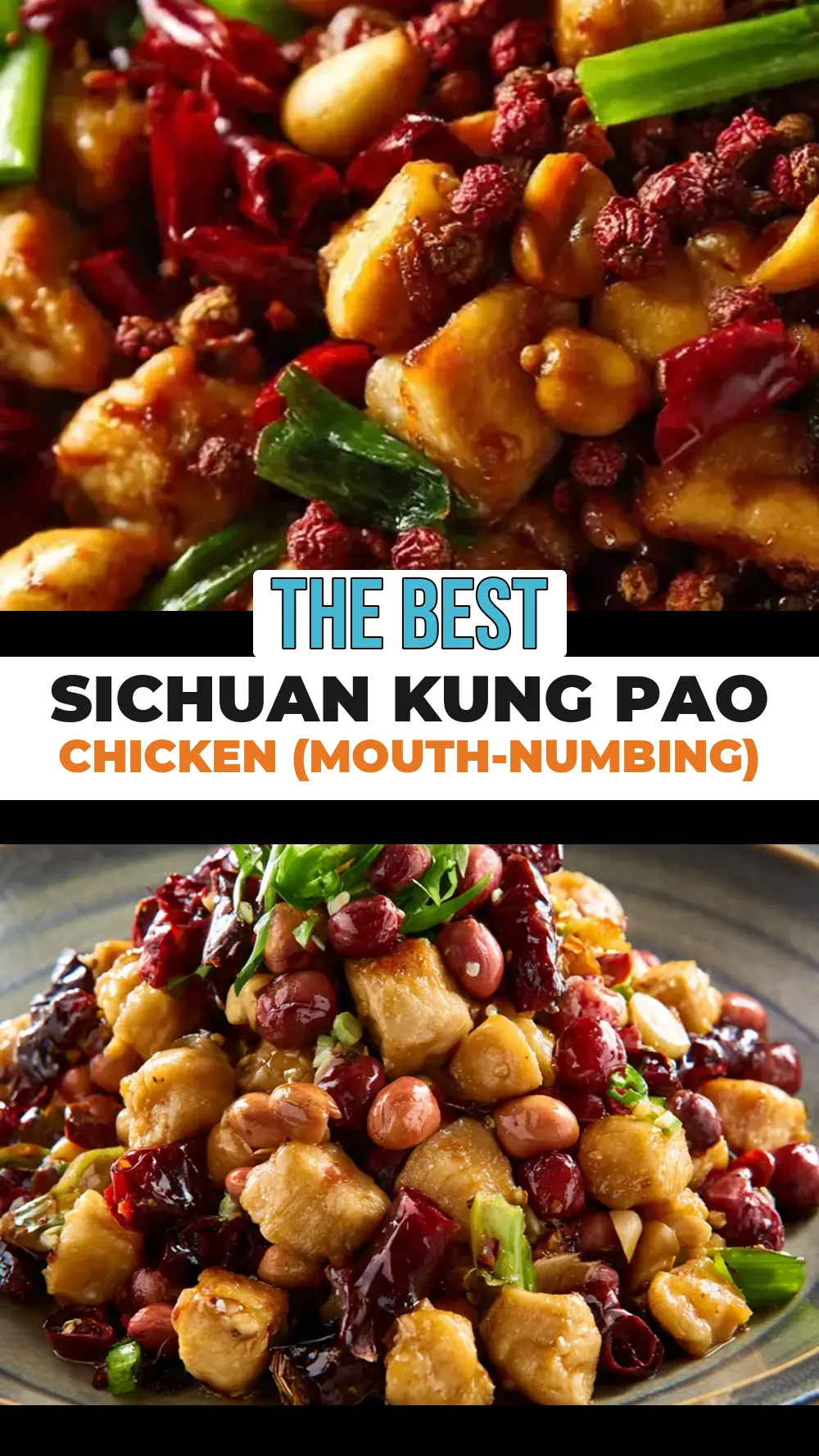
Sichuan Kung Pao Chicken (Mouth-Numbing)
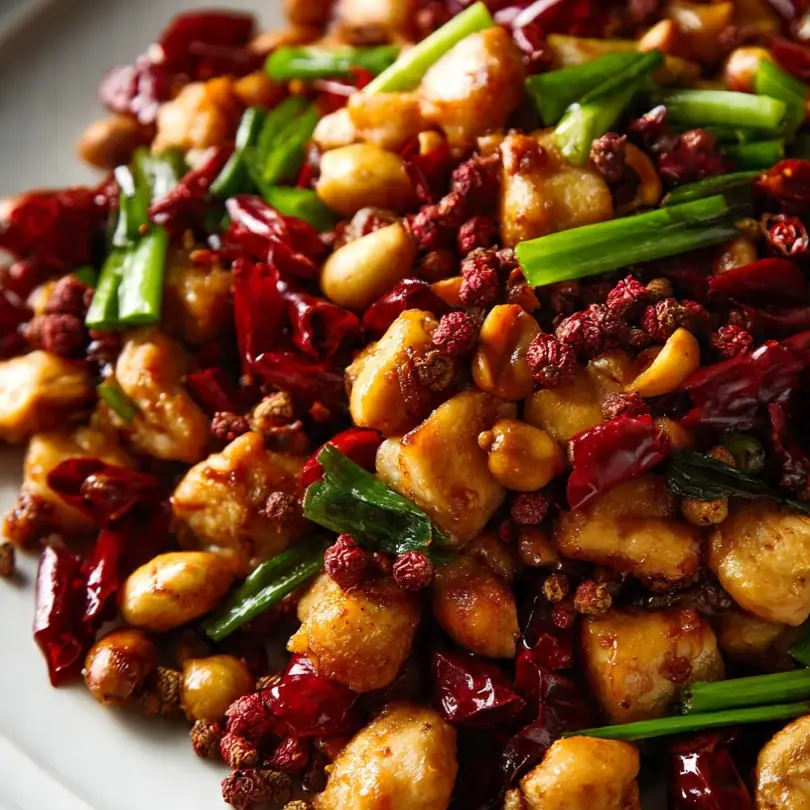
There are evenings when only a specific kind of heat will do—the kind that doesn’t just warm you but dances on your tongue, leaving a delightful, tingling numbness in its wake. This Sichuan Kung Pao Chicken (Mouth-Numbing) is my go-to recipe when I need something quick but impressive, a dish that delivers a restaurant-quality experience right from my own stovetop.
Recipe Overview
- Prep Time: 20 minutes
- Cook Time: 10 minutes
- Total Time: 30 minutes
- Servings: 4
- Difficulty: Intermediate
Why You’ll Love This Sichuan Kung Pao Chicken (Mouth-Numbing)
- Authentic, layered heat from Sichuan peppercorns and dried chillies creates the signature ‘mala’ sensation.
- Tender chicken pieces are wok-fried to juicy perfection in a fraction of the time.
- The glossy, savoury-sweet sauce clings to every morsel, balancing the fire with a touch of caramelised richness, much like the comforting heat in Spicy Mexican Chicken Enchiladas (Red Chili).cuisinespicy.com/spicy-buffalo-chicken-egg-rolls/”>Spicy Buffalo Chicken Egg Rolls.cuisinespicy.com/spicy-cajun-sausage-rice-soup-turkey-sausage/”>Spicy Cajun Sausage & Rice Soup (Turkey Sausage).
- Crunchy roasted peanuts and fresh spring onions provide textural contrast in every bite.
- I make this at least once a week—it’s become a family favourite, satisfying cravings for something bold and deeply satisfying.
Ingredients You’ll Need
- 500g boneless, skinless chicken thighs, cut into 2cm cubes
- 2 tablespoons light soy sauce
- 1 tablespoon cornflour
- 1 teaspoon sesame oil
- 3 tablespoons vegetable oil, divided
- 8-10 dried red chillies, snipped into 2cm pieces (seeds removed for less heat)
- 2 teaspoons Sichuan peppercorns
- 4 cloves garlic, finely sliced
- 2cm piece fresh ginger, peeled and julienned
- 4 spring onions, sliced into 2cm batons (white and green parts separated)
- 75g roasted unsalted peanuts
For the sauce:
- 2 tablespoons Chinese black vinegar (or balsamic vinegar)
- 1 tablespoon light soy sauce
- 1 tablespoon dark soy sauce
- 2 teaspoons sugar
- 1 teaspoon cornflour
- 100ml chicken stock
Tip: For the most vibrant colour and flavour, use Chinese black vinegar. Its malty depth is irreplaceable in this dish. If unavailable, a good quality balsamic vinegar makes a fine stand-in.
How to Make Sichuan Kung Pao Chicken (Mouth-Numbing)
- Marinate the chicken: In a medium bowl, combine the chicken cubes with 2 tablespoons light soy sauce, 1 tablespoon cornflour, and 1 teaspoon sesame oil. Stir until each piece is evenly coated. The chicken should look glossy and feel slightly sticky. Set aside for 15 minutes while you prepare the other ingredients.
- Prepare the sauce: In a small bowl, whisk together the Chinese black vinegar, 1 tablespoon light soy sauce, dark soy sauce, sugar, 1 teaspoon cornflour, and chicken stock. The mixture will be a deep, dark brown. Ensure the cornflour is completely dissolved—no white specks remaining.
- Toast the aromatics: Heat a large frying pan or wok over medium-high heat until a drop of water sizzles and evaporates instantly. Add 1 tablespoon of vegetable oil and swirl to coat. Add the dried chillies and Sichuan peppercorns. Stir-fry for about 30 seconds until the chillies darken slightly and release a smoky, almost woody aroma. The kitchen will smell intensely fragrant. Remove the chillies and peppercorns from the pan and set aside.
- Cook the chicken: Increase the heat to high and add the remaining 2 tablespoons of oil. The oil should shimmer. Carefully add the marinated chicken in a single layer—do not overcrowd. Let it sear undisturbed for 1 minute until the bottom turns a deep golden brown. You’ll hear a satisfying sizzle. Stir-fry for another 2-3 minutes until the chicken is cooked through and no longer pink inside. The pieces should feel firm to the touch.
- Add aromatics: Reduce the heat to medium. Add the sliced garlic and julienned ginger to the pan. Stir-fry for about 30 seconds until they become fragrant—the smell will turn sweet and pungent. Add the white parts of the spring onion and cook for another 30 seconds, just until they soften.
- Combine sauce and nuts: Return the toasted chillies and Sichuan peppercorns to the pan. Pour the prepared sauce over the chicken. Stir immediately and continuously. Within 30-45 seconds, the sauce will thicken and turn glossy, coating every piece. You’ll see it bubble and cling to the chicken. Add the roasted peanuts and toss to combine.
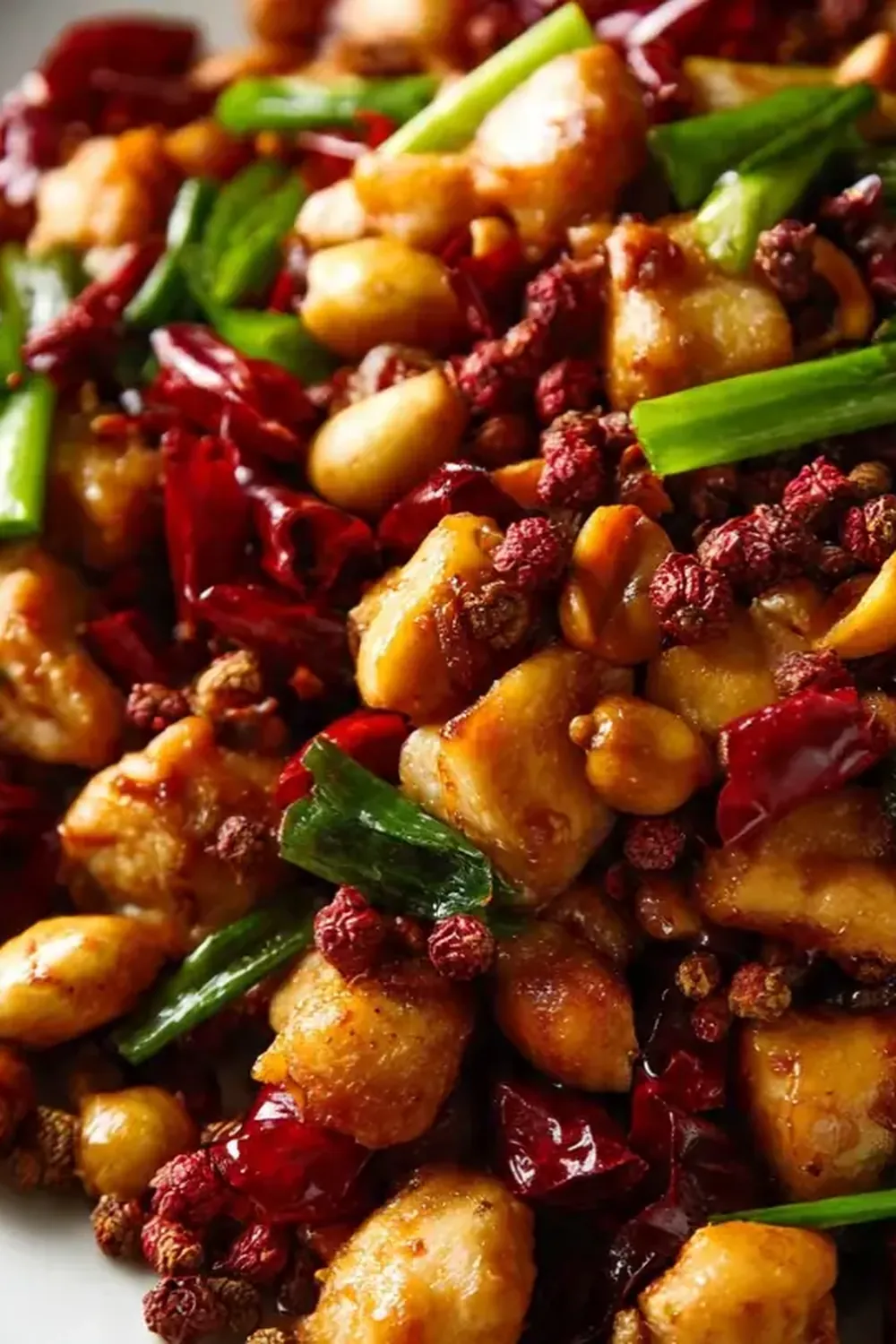
- Finish and serve: Sprinkle the green parts of the spring onion over the top. Give everything one final stir, then remove from the heat. The chicken should glisten with a rich, dark sauce, and the peanuts should be visible among the chillies. Serve immediately over steamed rice.
Tips From My Kitchen
- Sichuan peppercorns are the star: Their unique numbing quality (ma) is what defines this dish. Toast them lightly in a dry pan before grinding for the most potent effect. The tingling sensation is not just heat—it’s a complex citrusy buzz that opens up your palate.
- Don’t skip the marinade: The cornflour in the marinade creates a protective coating that locks in moisture and helps the chicken stay tender during high-heat cooking. It also helps the sauce adhere beautifully. Skipping it yields dry, less flavourful meat.
- Use chicken thighs, not breast: Thighs remain juicy and forgiving even if you cook them a minute too long. Breasts can become dry and stringy in this fast, high-heat method. The extra fat in thighs also carries the bold flavours better.
- Control the heat with dried chillies: The heat level is flexible. For a milder version, remove all seeds from the dried chillies. For a fiery experience, leave them in and add a teaspoon of chilli flakes along with the aromatics. Always have a glass of milk or yoghurt nearby as a palate cooler.
- Prepare everything before you start cooking: This dish comes together in minutes once the wok is hot. Have your sauce whisked, chillies snipped, and vegetables chopped. This mise en place approach prevents burning and ensures each ingredient hits the pan at the right moment.
- Use high heat and work quickly: The wok should be screaming hot. This ensures the chicken sears rather than steams, developing a caramelised exterior. If your pan isn’t hot enough, the chicken will release moisture and you’ll end up with a stew instead of a stir-fry.
Equipment You’ll Need
- Large frying pan or wok (carbon steel or non-stick works well)
- Sharp knife and cutting board
- Mixing bowls (one for marinade, one for sauce)
- Wooden spoon or spatula (preferably a long-handled wok spatula)
- Small bowl for holding prepared ingredients
- Measuring spoons
Common Mistakes to Avoid
- Overcrowding the pan: Adding too much chicken at once lowers the pan’s temperature, causing the meat to steam rather than sear. Cook in batches if necessary. You want that golden-brown crust, not a pale, watery finish.
- Wrong temperature: The oil must be shimmering hot before you add the chicken. If it’s not hot enough, the cornflour coating will stick and burn. If it’s too hot, the exterior will blacken before the interior cooks. Medium-high to high heat is the sweet spot.
- Skipping the rest time after marinating: Letting the chicken sit for at least 15 minutes allows the cornflour to absorb moisture and the soy sauce to penetrate. Rushing this step results in a thinner, less flavourful coating that slides off during cooking.
What to Serve With Sichuan Kung Pao Chicken (Mouth-Numbing)
- Steamed jasmine rice or fragrant basmati rice to soak up the glossy sauce
- A simple side of steamed bok choy or Healthy Veggie Fried Rice for a complete meal
- Quick-pickled cucumbers or a Crunchy Fattoush Salad to cut through the richness
- Cold beer or iced green tea for a refreshing contrast
Frequently Asked Questions
Sichuan Kung Pao Chicken (Mouth-Numbing)
Ingredients
Method
- Marinate the chicken: In a medium bowl, combine the chicken cubes with 2 tablespoons light soy sauce, 1 tablespoon cornflour, and 1 teaspoon sesame oil. Stir until each piece is evenly coated. The chicken should look glossy and feel slightly sticky. Set aside for 15 minutes while you prepare the other ingredients.
- Prepare the sauce: In a small bowl, whisk together the Chinese black vinegar, 1 tablespoon light soy sauce, dark soy sauce, sugar, 1 teaspoon cornflour, and chicken stock. The mixture will be a deep, dark brown. Ensure the cornflour is completely dissolved—no white specks remaining.
- Toast the aromatics: Heat a large frying pan or wok over medium-high heat until a drop of water sizzles and evaporates instantly. Add 1 tablespoon of vegetable oil and swirl to coat. Add the dried chillies and Sichuan peppercorns. Stir-fry for about 30 seconds until the chillies darken slightly and release a smoky, almost woody aroma. The kitchen will smell intensely fragrant. Remove the chillies and peppercorns from the pan and set aside.
- Cook the chicken: Increase the heat to high and add the remaining 2 tablespoons of oil. The oil should shimmer. Carefully add the marinated chicken in a single layer—do not overcrowd. Let it sear undisturbed for 1 minute until the bottom turns a deep golden brown. You’ll hear a satisfying sizzle. Stir-fry for another 2-3 minutes until the chicken is cooked through and no longer pink inside. The pieces should feel firm to the touch.
- Add aromatics: Reduce the heat to medium. Add the sliced garlic and julienned ginger to the pan. Stir-fry for about 30 seconds until they become fragrant—the smell will turn sweet and pungent. Add the white parts of the spring onion and cook for another 30 seconds, just until they soften.
- Combine sauce and nuts: Return the toasted chillies and Sichuan peppercorns to the pan. Pour the prepared sauce over the chicken. Stir immediately and continuously. Within 30-45 seconds, the sauce will thicken and turn glossy, coating every piece. You’ll see it bubble and cling to the chicken. Add the roasted peanuts and toss to combine.
- Finish and serve: Sprinkle the green parts of the spring onion over the top. Give everything one final stir, then remove from the heat. The chicken should glisten with a rich, dark sauce, and the peanuts should be visible among the chillies. Serve immediately over steamed rice.
Notes
I’d love to hear how your Sichuan Kung Pao Chicken turns out. Did you dial up the heat or keep it mild? Drop a comment below and let me know—your feedback helps other home cooks find their perfect balance. Happy cooking!