New York Style Pizza Dough

Nothing beats the quiet thrill of a weekend spent coaxing a New York Style Pizza Dough into life, the kitchen slowly warming as the yeast begins its gentle work. It’s a project for slowing down, for letting the hours dissolve into the scent of flour and the satisfying tug of a well-developed gluten network.
Recipe Overview
- Prep Time: 30 minutes (plus 24-hour cold fermentation)
- Cook Time: 10-12 minutes per pizza
- Total Time: 24 hours 40 minutes (mostly hands-off)
- Servings: Makes 4 x 30cm pizzas (serves 4-6)
- Difficulty: Medium – requires patience and a hot oven
Why You’ll Love This New York Style Pizza Dough
- Authentic Chew and Crisp: A long, cold fermentation develops a complex flavour and that signature New York texture—a crisp exterior giving way to a soft, airy crumb.
- Weekend-Friendly Rhythm: The dough does the work while you relax. Mix it one day, bake the next. It fits perfectly into a cosy, unhurried weekend.
- Incredibly Satisfying to Make: There’s a deep, primal pleasure in transforming simple flour, water, yeast, and salt into something so beautiful. The aroma alone is worth the effort.
- Perfectly Customisable: This base is a blank canvas. You can top it simply with tomatoes and mozzarella, or load it with vegetables and your favourite protein. It works every time.
- Freezes Like a Dream: Make a double batch. Ball up the extra dough, wrap it tightly, and freeze it for up to three months. A Friday night pizza is always just a thaw away.
Ingredients You’ll Need
- 500g strong bread flour (or tipo 00 flour)
- 325ml lukewarm water (around 35°C)
- 1½ tsp fine sea salt
- 1 tsp caster sugar
- 7g sachet (or 2¼ tsp) fast-action dried yeast
- 2 tbsp extra virgin olive oil, plus extra for greasing
- Fine semolina or cornmeal, for dusting
- For the tomato base: 400g can of good-quality chopped tomatoes, drained and crushed
- 2 cloves garlic, minced
- 1 tbsp extra virgin olive oil
- 1 tsp dried oregano
- Salt and black pepper, to taste
- 250g fresh mozzarella, torn into pieces
- Fresh basil leaves, for serving
Tip: For the most authentic texture, use a high-protein bread flour (12-13% protein content). It gives the dough the strength to stretch thin without tearing.
How to Make New York Style Pizza Dough
- Activate the yeast: In a small bowl, combine the lukewarm water, sugar, and dried yeast. Give it a gentle stir and let it sit for 5-10 minutes. You are looking for a frothy, creamy layer on top, like a light beer head. The scent will be softly yeasty.
- Mix the dough: In a large mixing bowl, whisk together the bread flour and salt. Make a well in the centre, then pour in the activated yeast mixture and the olive oil. Using a wooden spoon or your hands, bring the mixture together into a shaggy, rough mass. The dough will feel dry and crumbly at this stage; don’t worry.
- Knead for silkiness: Turn the dough out onto a clean, lightly floured surface. Knead for 10-12 minutes. Use the heel of your hand to push the dough away from you, then fold it back over itself. The dough will transform from sticky and rough to smooth, supple, and elastic. It should spring back slightly when you poke it with a finger. The surface will feel as smooth as a baby’s cheek.
- First prove: Shape the dough into a tight ball. Place it in a lightly oiled bowl, turning to coat all sides. Cover the bowl with a damp tea towel or cling film. Let it prove at room temperature for 1-2 hours. The dough should double in size. It will feel airy and light, and a gentle indent will remain when you press it with a fingertip.
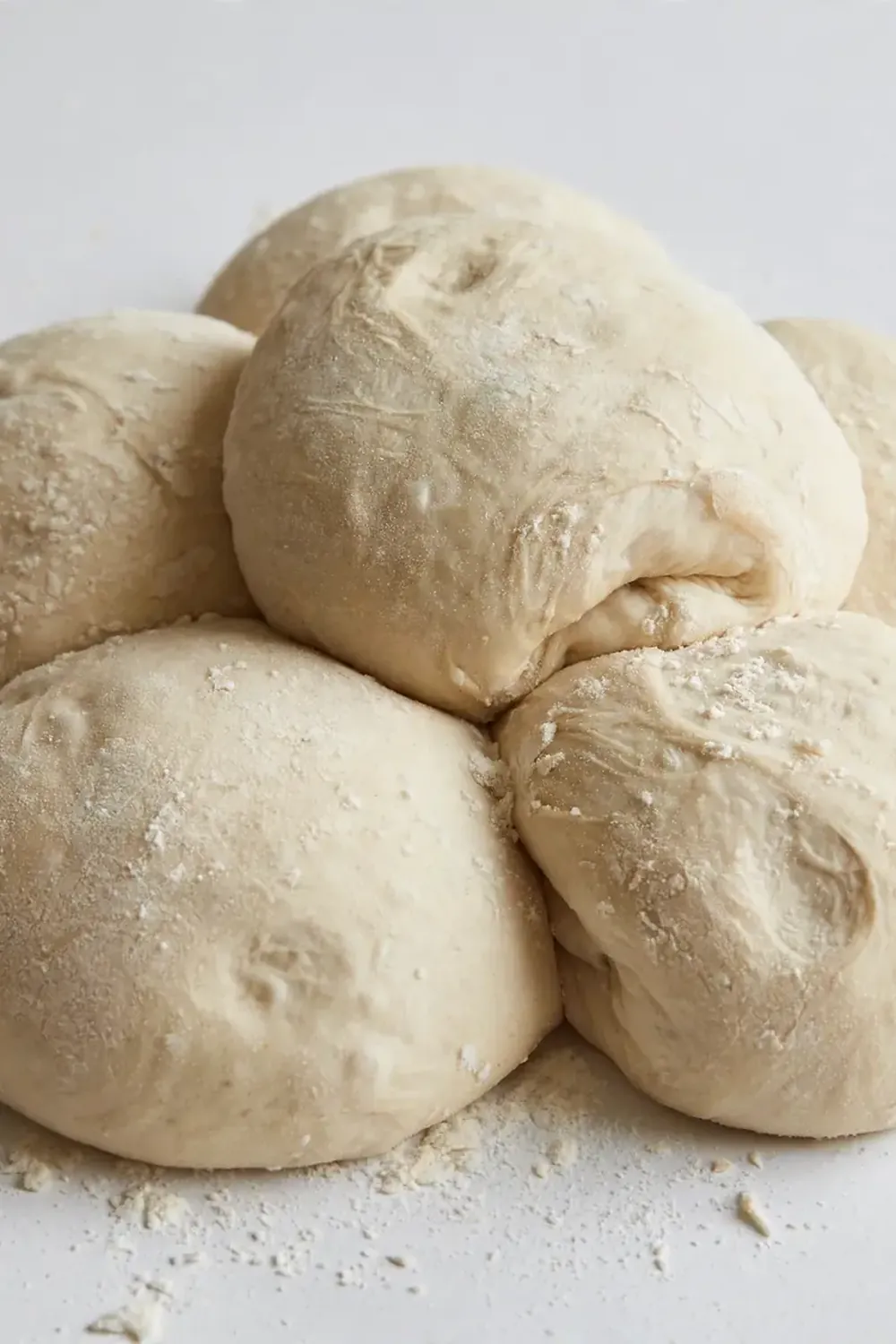
- Cold ferment for depth of flavour: Punch the dough down gently to release the gas. Divide it into 4 equal pieces (about 220g each). Shape each piece into a tight ball. Place the balls on a semolina-dusted tray, cover loosely with cling film, and refrigerate for at least 24 hours, and up to 72 hours. This slow rise develops a nutty, complex aroma that you simply cannot get from a same-day dough.
- Prepare your oven and surface: About an hour before you want to bake, remove the dough balls from the fridge. Place a pizza stone or an upside-down baking tray on the middle rack of your oven. Preheat the oven to its highest setting – usually 250°C (or 240°C fan). The stone must be screaming hot; you should feel a fierce wave of heat when you open the door.
- Shape the pizza: On a lightly floured surface, take one dough ball. Press it flat with your fingertips, then gently stretch it from the centre outwards, working your way around the disc. Lift the dough and let gravity help you stretch it further, using your knuckles to support the edges. The dough should be very thin in the centre, with a slightly thicker rim. It will feel supple and elastic, not tight. The disc should be about 30cm across.
- Assemble and bake: Transfer the stretched dough to a semolina-dusted pizza peel or another upside-down baking tray. Spread a thin layer of the crushed tomato mixture over the base, leaving a 2cm border. Scatter torn mozzarella over the sauce. Slide the pizza onto the hot stone. Bake for 8-12 minutes. The crust will turn a deep golden brown, the cheese will bubble and brown in spots, and the kitchen will fill with the glorious scent of toasted yeast and melting mozzarella. The bottom should be crisp and lightly charred.
- Finish and serve: Remove the pizza from the oven using the peel or a large spatula. Scatter fresh basil leaves over the top immediately. Let it rest for 2 minutes before slicing. The crust should make a pleasing crackle as you cut it.
Tips From My Kitchen
- Weigh your ingredients, don’t measure them: Flour volume can vary wildly depending on how you scoop it. A digital kitchen scale ensures a consistent hydration level every time. I’ve been making this for over 6 years, and it never disappoints when I weigh everything. The water-to-flour ratio is the single most important factor in achieving the right crumb.
- Don’t rush the cold fermentation: The 24-hour rest in the fridge is non-negotiable for a true New York-style crust. The cold slows down the yeast, allowing enzymes to break down the flour’s starches into simple sugars. This creates a deeper, more complex flavour and a more digestible dough. The dough will also be significantly easier to stretch thin without snapping back.
- Use a very hot oven and a preheated surface: The intense heat (250°C or as high as your oven will go) mimics a pizza oven. The preheated stone or tray ensures the bottom of the pizza cooks instantly, creating a crisp, charred crust. If you put the pizza onto a cold tray, the dough will steam instead of sear, resulting in a soggy base.
- Stretch, don’t roll: Rolling the dough with a pin knocks out all the beautiful air bubbles you’ve cultivated during fermentation. Those air bubbles are what give the crust its light, airy interior. Always stretch the dough by hand, using your fingertips to push from the centre outwards, preserving the gas.
- Go easy on the sauce and cheese: A classic New York slice is about balance. Use a modest layer of crushed tomatoes and a moderate amount of mozzarella. Overloading the top will make the centre soggy, and the crust won’t be able to bake through properly. You want to taste the dough itself, not just the toppings.
Equipment You’ll Need
- Large mixing bowl
- Wooden spoon or dough scraper
- Digital kitchen scales
- Pizza stone or heavy-duty baking tray (upside down)
- Pizza peel or another thin baking tray
- Sharp knife or pizza wheel
Common Mistakes to Avoid
- Overcrowding the pan: If you’re using a baking tray instead of a stone, never try to bake more than one pizza at a time. The tray needs to stay as hot as possible. Adding a second cold pizza will drop the temperature drastically, leading to a pale, undercooked crust. Bake them one at a time.
- Wrong temperature: A lukewarm oven will produce a dense, bread-like crust. Your oven must be preheated to its absolute maximum temperature for a full 45 minutes before baking. This ensures the stone or tray is thoroughly heated and ready to deliver the intense bottom heat needed for that signature crisp.
- Skipping the rest time: Pulling the dough straight from the fridge and trying to stretch it is a recipe for frustration. Cold dough is tight and resistant; it will snap back into a small disc. Always let the dough rest at room temperature for at least an hour before shaping. It will relax, becoming pliable and easy to work with.
Delicious Variations to Try
- Spicy Version: Add ½ teaspoon of chilli flakes to the tomato sauce base, or scatter sliced fresh chillies over the mozzarella before baking. For an extra kick, drizzle a little chilli oil over the finished pizza before serving.
- Vegetarian/Vegan Option: For a vegan version, omit the mozzarella and use a generous layer of cashew-based ricotta or a good-quality vegan mozzarella. Load the pizza with roasted red peppers, artichoke hearts, thinly sliced courgette, and black olives. The umami from the vegetables will more than compensate for the cheese.
- Different Protein: Top the pizza with shredded cooked chicken, seasoned with smoked paprika and garlic. Alternatively, use thin slices of beef fillet, seared quickly and laid over the cheese before baking. For a more traditional take, you can use halved meatballs.
What to Serve With New York Style Pizza Dough
This pizza is a meal in itself, but a few simple sides turn it into a proper feast. A crisp, refreshing salad cuts through the richness beautifully. I love serving it alongside a Crunchy Fattoush Salad Recipe for a fantastic textural contrast. For a heartier start, a bowl of Zesty Lentil Soup Cumin Lemon Recipe makes a wonderful companion. And if you’ve got a sweet tooth, you can’t go wrong with Fluffy Vanilla Cupcakes Buttercream for dessert.
- Simple green salad with a lemon and olive oil dressing
- Lightly dressed rocket leaves with shaved Parmesan
- Garlic knots or breadsticks made from leftover dough
Still hungry for ideas? You might also love Homemade Pizza Dough Recipe Crust from our sister kitchens.
Frequently Asked Questions
New York Style Pizza Dough
Ingredients
Method
- Activate the yeast: In a small bowl, combine the lukewarm water, sugar, and dried yeast. Give it a gentle stir and let it sit for 5-10 minutes. You are looking for a frothy, creamy layer on top, like a light beer head. The scent will be softly yeasty.
- Mix the dough: In a large mixing bowl, whisk together the bread flour and salt. Make a well in the centre, then pour in the activated yeast mixture and the olive oil. Using a wooden spoon or your hands, bring the mixture together into a shaggy, rough mass. The dough will feel dry and crumbly at this stage; don’t worry.
- Knead for silkiness: Turn the dough out onto a clean, lightly floured surface. Knead for 10-12 minutes. Use the heel of your hand to push the dough away from you, then fold it back over itself. The dough will transform from sticky and rough to smooth, supple, and elastic. It should spring back slightly when you poke it with a finger. The surface will feel as smooth as a baby's cheek.
- First prove: Shape the dough into a tight ball. Place it in a lightly oiled bowl, turning to coat all sides. Cover the bowl with a damp tea towel or cling film. Let it prove at room temperature for 1-2 hours. The dough should double in size. It will feel airy and light, and a gentle indent will remain when you press it with a fingertip.
- Cold ferment for depth of flavour: Punch the dough down gently to release the gas. Divide it into 4 equal pieces (about 220g each). Shape each piece into a tight ball. Place the balls on a semolina-dusted tray, cover loosely with cling film, and refrigerate for at least 24 hours, and up to 72 hours. This slow rise develops a nutty, complex aroma that you simply cannot get from a same-day dough.
- Prepare your oven and surface: About an hour before you want to bake, remove the dough balls from the fridge. Place a pizza stone or an upside-down baking tray on the middle rack of your oven. Preheat the oven to its highest setting – usually 250°C (or 240°C fan). The stone must be screaming hot; you should feel a fierce wave of heat when you open the door.
- Shape the pizza: On a lightly floured surface, take one dough ball. Press it flat with your fingertips, then gently stretch it from the centre outwards, working your way around the disc. Lift the dough and let gravity help you stretch it further, using your knuckles to support the edges. The dough should be very thin in the centre, with a slightly thicker rim. It will feel supple and elastic, not tight. The disc should be about 30cm across.
- Assemble and bake: Transfer the stretched dough to a semolina-dusted pizza peel or another upside-down baking tray. Spread a thin layer of the crushed tomato mixture over the base, leaving a 2cm border. Scatter torn mozzarella over the sauce. Slide the pizza onto the hot stone. Bake for 8-12 minutes. The crust will turn a deep golden brown, the cheese will bubble and brown in spots, and the kitchen will fill with the glorious scent of toasted yeast and melting mozzarella. The bottom should be crisp and lightly charred.
- Finish and serve: Remove the pizza from the oven using the peel or a large spatula. Scatter fresh basil leaves over the top immediately. Let it rest for 2 minutes before slicing. The crust should make a pleasing crackle as you cut it.
Notes
There you have it—a proper New York-style pizza dough, made with patience and a whole lot of love. I hope this becomes your new favourite weekend ritual. If you give it a try, I’d love to hear how you got on, or if you have any questions. Leave a comment below and let’s talk pizza.