Ingredients
Method
- Preheat and prepare. Set your oven to 230°C (450°F) and line a baking tray with parchment. While it heats, place your flour, baking powder, bicarbonate of soda, and salt into a large bowl. Whisk them together until the pale beige mixture feels light and airy between your fingers.
- Cut in the butter. Drop the cold butter cubes into the flour. Using a pastry cutter or your fingertips, work the butter into the flour until the mixture resembles coarse breadcrumbs with some flattened butter pieces the size of small peas. You should see distinct yellow flecks throughout — that’s what creates the flaky layers.
- Add the buttermilk. Make a well in the centre and pour in the cold buttermilk. Stir with a wooden spoon until a shaggy, sticky dough forms — it should look rough and lumpy, not smooth. Turn it onto a floured surface and gently bring it together with your hands. Pat it into a rectangle about 2.5cm thick. Fold it over itself (like a letter), then pat out again. Repeat this fold twice more. The dough will feel soft and slightly tacky, but not wet.
- Cut and bake. Using a 6cm round cutter, press straight down without twisting. Place the biscuits on the tray so they just touch each other — this helps them rise tall. Brush the tops with the reserved buttermilk. Bake for 12-14 minutes, until the tops are deep golden brown and the biscuits sound hollow when tapped. The kitchen will smell of toasted butter and warm flour.
- Brown the mince. While the biscuits bake, place a large skillet over medium-high heat. Add the minced chicken and break it up with a wooden spoon. Cook for 6-8 minutes, stirring occasionally, until it is no longer pink and the pieces are browned at the edges. The sound should be a steady, gentle sizzle, not a violent crackle. Remove the mince to a plate, leaving any rendered fat in the pan.
- Make the roux. Reduce the heat to medium. Add the 60g of butter to the same pan. Once it melts and begins to foam, sprinkle in the 60g of flour. Whisk continuously for 2 minutes — the mixture will turn a pale tan colour and smell nutty and toasty. It should be thick and paste-like, pulling away from the sides of the pan.
- Build the gravy. Slowly pour in the chicken stock while whisking vigorously to prevent lumps. The mixture will seize up at first, then loosen as you add more liquid. Pour in the milk, still whisking. Add the dried sage, cracked black pepper, and salt. Stir in the browned mince. Bring the gravy to a gentle bubble — you want lazy bubbles breaking the surface, not a furious boil. Cook for 5-7 minutes, stirring occasionally, until the gravy thickens enough to coat the back of a spoon. It should look glossy and smell deeply of sage and pepper.
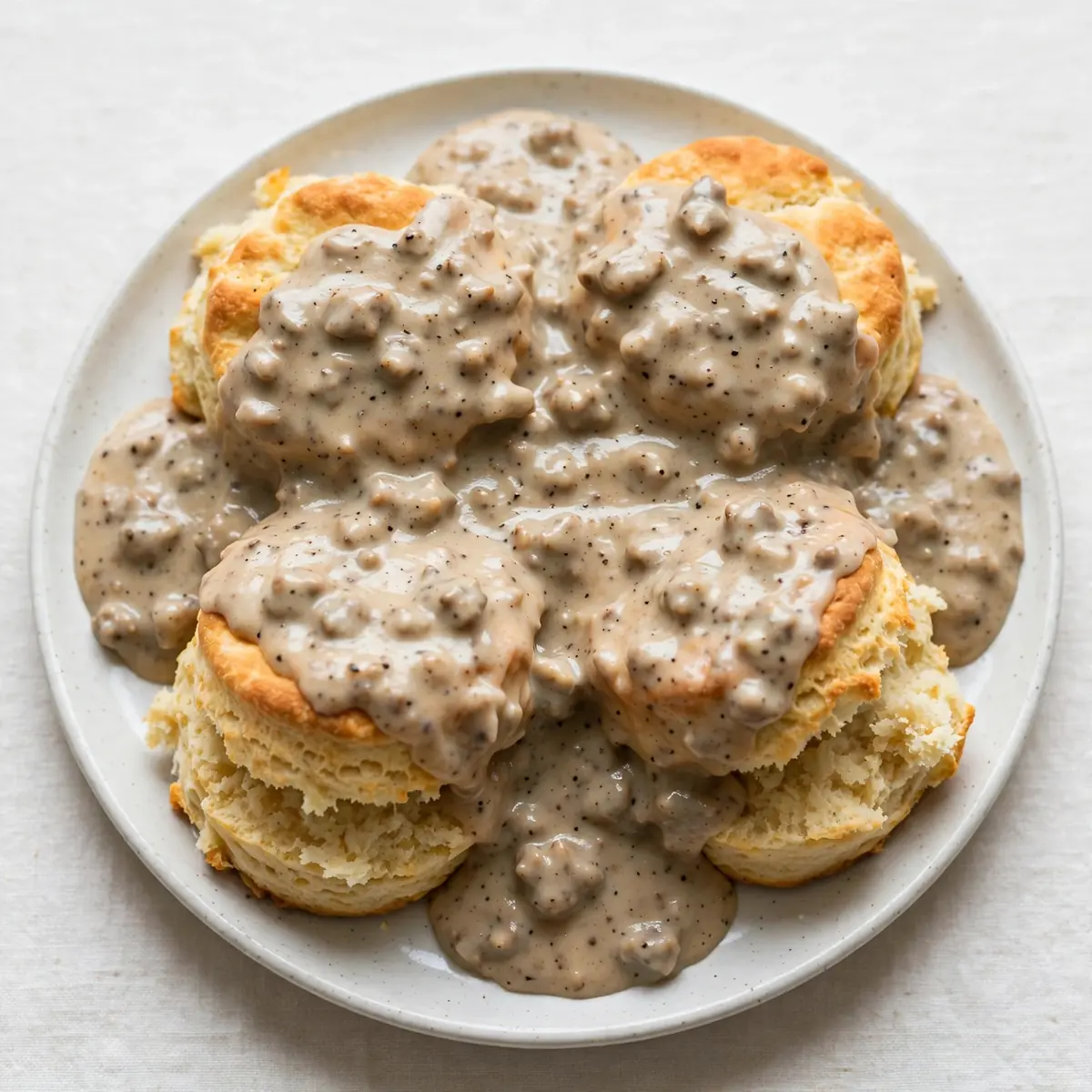
- Rest and serve. Remove the gravy from the heat and let it sit for 2 minutes — it will continue to thicken. Split a warm biscuit in half, ladle a generous amount of gravy over the bottom half, then crown with the top half. Spoon extra gravy on top. The biscuit should be crisp on the outside, soft and steamy within.
Notes
For best results, keep all biscuit ingredients cold. Do not twist the cutter when cutting biscuits to ensure they rise tall. The gravy will thicken as it rests.