Ingredients
Method
- Activate the yeast: In a small bowl, whisk the lukewarm milk with a teaspoon of the caster sugar. Sprinkle the yeast over the top and let it sit for 5–10 minutes. You will see a frothy, bubbly layer form on the surface — a sign the yeast is alive and hungry. The smell at this stage is faintly bready and slightly sweet, a promise of things to come.
- Mix the dough: In a large mixing bowl, combine the flour, remaining caster sugar, and salt. Make a well in the centre. Pour in the yeast mixture, the beaten egg, and the melted butter. Mix with a wooden spoon until a shaggy, sticky dough forms. It will look rough and feel tacky to the touch — resist the urge to add more flour at this point.
- Knead to silkiness: Turn the dough out onto a lightly floured surface. Knead for 8–10 minutes. The dough will start off sticky and a bit messy, but as you work it, it will become smooth, elastic, and supple. You'll feel the change under your palms — no longer clinging, but soft and bouncy like a baby's cheek. The sound of kneading is a soft, rhythmic thud against the counter.
- First rise: Place the dough in a lightly oiled bowl, cover with a damp tea towel or cling film, and leave in a warm, draught-free spot for 1 hour, or until doubled in size. The dough should look puffed up and airy, and when you gently poke it with a finger, the indent should stay rather than spring back immediately.
- Prepare the filling and roll: While the dough rises, mix the soft butter, brown sugar, and ground cinnamon into a smooth paste. Punch down the risen dough — it will deflate with a soft sigh. On a floured surface, roll it out into a large rectangle, roughly 30cm x 40cm, about 1cm thick. Spread the cinnamon paste evenly over the entire surface, leaving a 2cm border along the long edge furthest from you. The paste should be thick and fragrant, smelling intensely of warm spice.
- Shape the rolls: Starting from the long edge closest to you, roll the dough tightly into a log, using the border to seal the seam. Roll gently but firmly, keeping the log even. Using a sharp serrated knife or unflavoured dental floss, cut the log into 12 even slices. Arrange them in a greased 23cm x 33cm baking dish, cut-side up. They will be snug but not squashed. Cover again and leave to rise for 30 minutes. The rolls will puff up and touch each other, creating a lovely, crowded dish of soft dough.
- Bake to golden glory: Preheat your oven to 180°C (fan-assisted). Bake the rolls for 25–30 minutes, until the tops are deep golden brown and the edges are bubbling with caramelised sugar. Your kitchen will be filled with a scent that is pure warmth — buttery, cinnamony, and sweet. To check, a skewer inserted into the centre of a roll should come out clean.
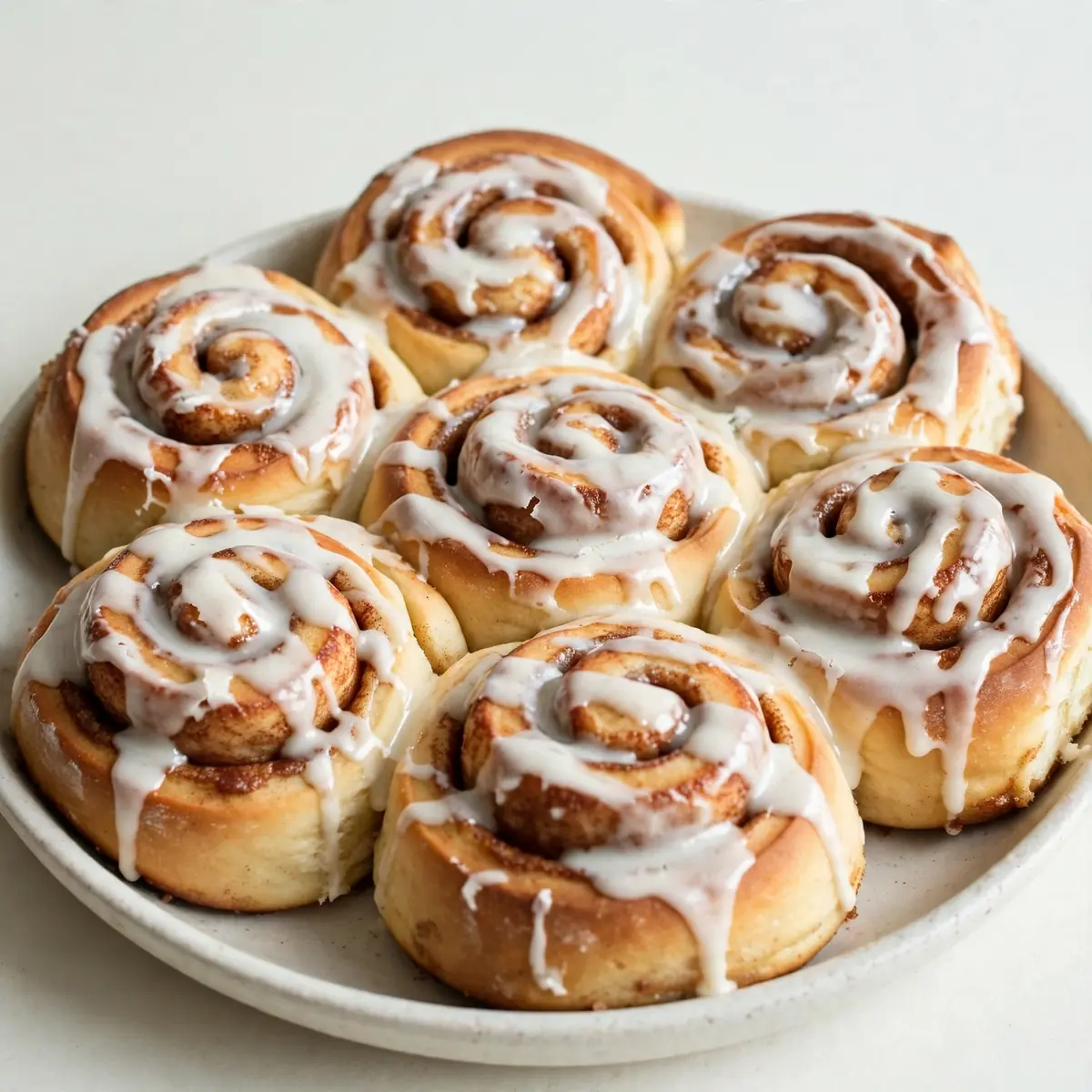
- Add the final touch: While the rolls cool for 10 minutes, beat the cream cheese, icing sugar, and vanilla extract until smooth, adding milk a tablespoon at a time until you reach a thick, drizzly consistency. Spread this creamy topping over the warm rolls. It will melt slightly into the crevices, creating a beautiful, glossy finish.
Notes
Prep time excludes rising (1 hour first rise, 30 minutes second rise). For best results, use room temperature ingredients. Rolls can be made ahead and refrigerated after shaping; do the second rise and bake the next day.