Traditional Pad Thai Recipe At Home
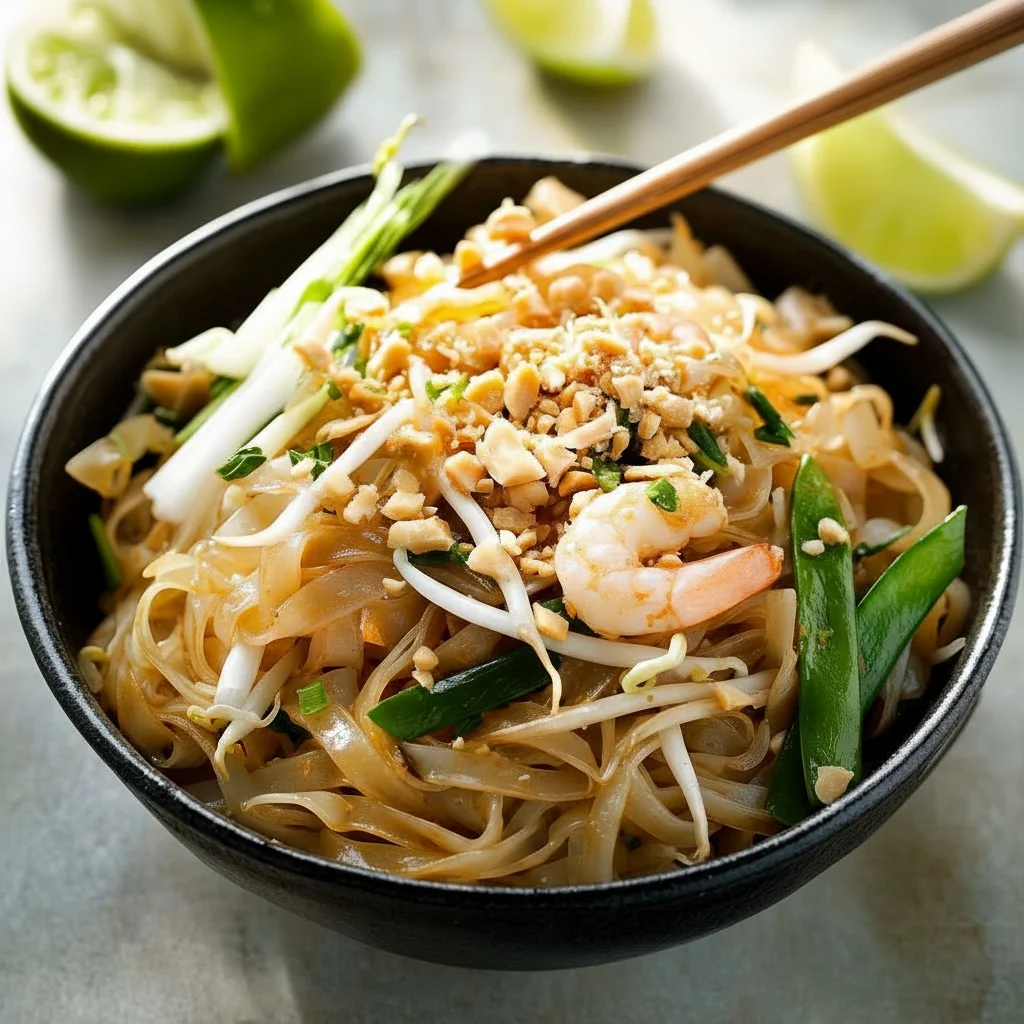
There’s something truly magical about the sizzle and aroma of a proper Pad Thai being tossed in a searingly hot wok. It’s a dish that transports you straight to the bustling streets of Bangkok, with its intricate balance of sweet, sour, salty, and savoury notes. For years, I tried to replicate that authentic experience at home, often ending up with noodles that were either too sticky or a sauce that just missed the mark. This Pad Thai recipe is the culmination of all that trial and error, a version that I am genuinely proud to share.
Interestingly, my final breakthrough with the texture of the prawns came from an unexpected source. This was inspired by a dish I had at a little restaurant in Spain, where the prawns were flash-fried to be incredibly tender yet firm. I applied that high-heat, quick-cook method here, and it made all the difference. This is more than just a noodle recipe; it’s a method for creating a dish with distinct textures and layers of flavour, from the chewy rice noodles and crisp beansprouts to the tender prawns and crunchy peanuts.
It’s the kind of meal that works beautifully for a special weeknight dinner when you want something impressive that comes together in about 30 minutes. It’s a vibrant, satisfying dish that my family now requests constantly, and I’m confident yours will too. We’re going to build the flavours from the ground up, starting with a perfectly balanced sauce that is the true heart of any great Pad Thai.
Recipe Overview
This Pad Thai recipe focuses on creating an authentic flavour profile with easily accessible ingredients. The secret is in the sauce—a carefully balanced mix of tamarind paste, fish sauce, and palm sugar that coats the noodles without making them heavy. When I was testing this, I found that letting the sauce simmer for just a minute deepens the flavour significantly. Expect chewy noodles, tender protein, and a fresh crunch from the garnishes.
- Prep Time: 15 minutes
- Cook Time: 15 minutes
- Total Time: 30 minutes
- Servings: 2-3 people
- Difficulty: Medium
Why You’ll Love This Pad Thai Recipe
- Authentic Sauce Flavour: We use tamarind paste, fish sauce, and palm sugar to create a sauce that is genuinely balanced—it’s tangy, sweet, and deeply savoury, just as it should be. It clings to the noodles beautifully.
- Ready in Under 30 Minutes: From start to finish, this entire meal is on the table in about half an hour, making it ideal for a busy evening when you’re craving something special.
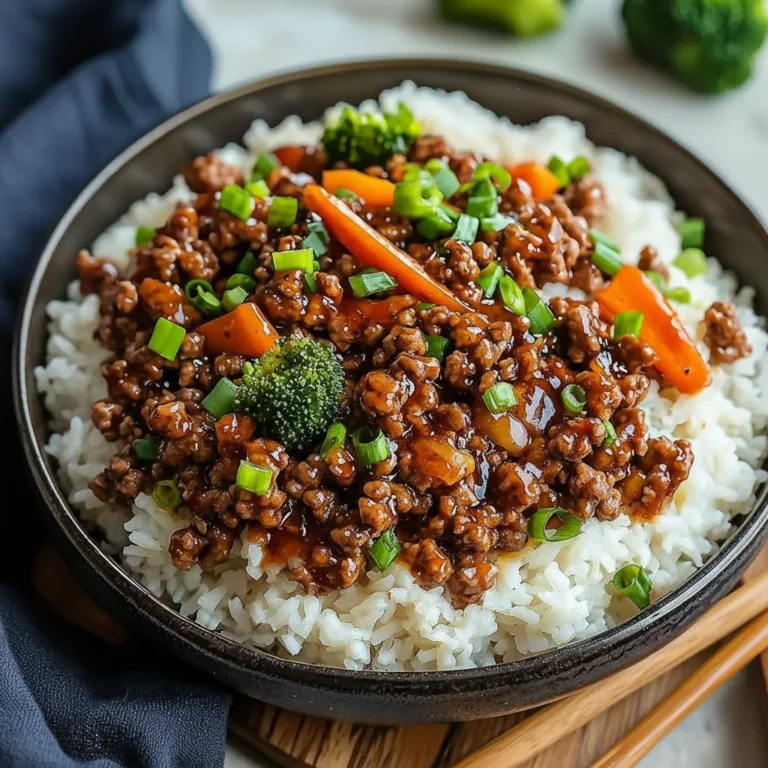
- A Truly Flexible Noodle Recipe: This recipe works wonderfully with king prawns, sliced chicken breast, or firm tofu. You can also add extra vegetables like carrots or peppers. It’s easy to adapt to your taste. For another great stir-fry idea, check out my Savory Beef And Broccoli Stir Fry Recipe.
- Great for a Date Night In: This dish feels a bit fancy and impressive, making it a brilliant choice for a home-cooked meal for two. The active cooking time is short, so you won’t be stuck in the kitchen for ages.
- Family Tested: My son, who can be a bit fussy with new textures, absolutely loves the combination of the soft noodles and the crunchy peanuts. This is one of those rare dishes that everyone in my house agrees on.
Ingredients You’ll Need
For the best results, try to find proper Thai rice stick noodles, which are about 5mm wide. They hold their texture much better than thinner vermicelli. When it comes to fish sauce, I always reach for the Squid brand; its flavour is consistent and not overly pungent. You can find most of these ingredients in the world food aisle of larger supermarkets or at an Asian grocer.
- 200g dried flat rice stick noodles
- 2 tbsp vegetable or groundnut oil, divided
- 2 cloves garlic, finely minced
- 1 shallot, finely sliced
- 200g raw king prawns, peeled and deveined (or 200g chicken breast, thinly sliced)
- 100g firm tofu, pressed and cut into 2cm cubes
- 2 large free-range eggs
- 100g fresh beansprouts
- 3 spring onions or a small bunch of garlic chives, cut into 4cm lengths
- For the Sauce:
- 3 tbsp tamarind paste (not concentrate)
- 3 tbsp fish sauce
- 3 tbsp palm sugar (or soft brown sugar)
- 1 tbsp water
- 1/2 tsp dried chilli flakes (optional)
- For the Topping:
- 50g roasted peanuts, roughly chopped
- 1 lime, cut into wedges
- A small handful of fresh coriander, chopped
- Extra chilli flakes, to serve
Elena’s Tip: If your palm sugar is very hard, finely grate it or gently warm it in the microwave for 10-15 seconds. This helps it dissolve into the sauce smoothly without any gritty texture.
How to Make This Pad Thai Recipe
The key to a successful stir-fry like this Thai recipe is having everything prepped and ready to go before you even turn on the heat. The cooking process is very fast, so you won’t have time to be chopping vegetables once the wok is hot. We call this ‘mise en place’, and it’s a non-negotiable step for a stress-free experience.
- Soak the Noodles: Place the dried rice noodles in a large bowl. Cover them with hot (not boiling) water from the kettle and let them soak for about 10-15 minutes, or according to the packet instructions. They should be pliable and soft but still have a definite bite. Drain them well and set aside.
- Make the Pad Thai Sauce: While the noodles are soaking, combine all the sauce ingredients—tamarind paste, fish sauce, palm sugar, water, and chilli flakes—in a small saucepan. Heat gently over a low heat, stirring continuously until the sugar has completely dissolved. Give it a taste; it should be a bold mix of sour, salty, and sweet. Set aside.
- Cook the Protein: Heat 1 tbsp of oil in a large wok or frying pan over a medium-high heat until it shimmers. Add the tofu cubes and fry for 3-4 minutes, turning occasionally, until they are golden and slightly crisp on all sides. Remove the tofu from the wok and set it aside.
- Sauté the Aromatics and Prawns: Add the remaining 1 tbsp of oil to the wok. Add the minced garlic and sliced shallot and stir-fry for 30 seconds until fragrant. Be careful not to let the garlic burn. Add the prawns (or chicken) and cook for 2-3 minutes until the prawns turn pink and opaque. If using my Savory Garlic Butter Shrimp For Dinner method, ensure the heat is high for a quick sear.
- Scramble the Eggs: Push everything to one side of the wok. Crack the two eggs into the empty space. Let them set for a moment before scrambling them with your spatula until just cooked.
- Combine Everything: Now, add the drained noodles, the cooked tofu, and the prepared sauce to the wok. Using tongs or two spatulas, toss everything together continuously for 1-2 minutes, ensuring every strand of noodle is coated in the sauce. I find that a gentle lifting and folding motion works best to prevent the noodles from breaking.
- Add the Greens: Add the beansprouts and spring onions (or garlic chives). Toss for another minute until the beansprouts are slightly wilted but still have a good crunch. Don’t overcook them!
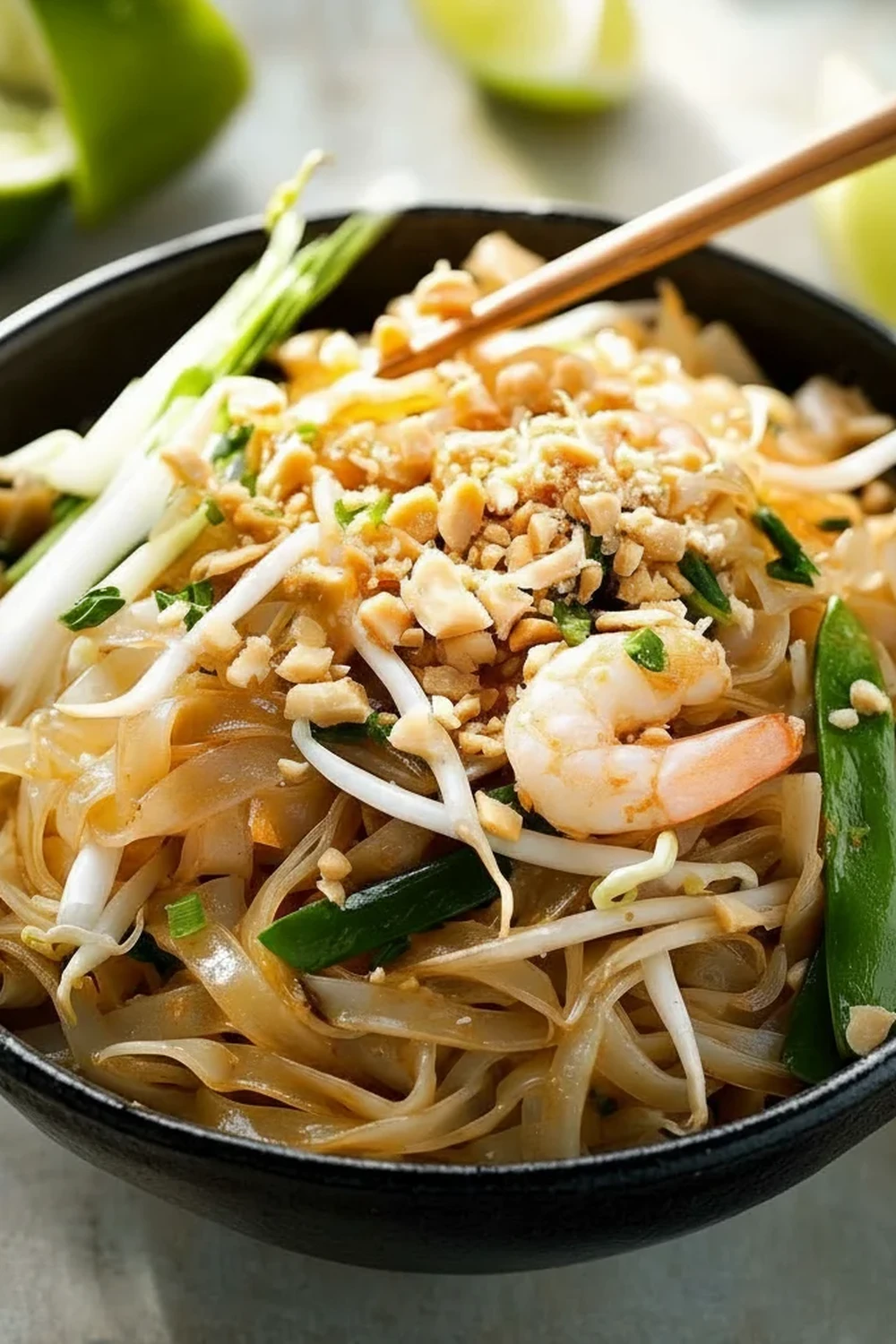
- Serve Immediately: Divide the Pad Thai between serving plates. Garnish generously with the chopped roasted peanuts, fresh coriander, and a wedge of lime on the side for squeezing over. Serve with extra chilli flakes if you like more heat.
Tips From My Kitchen
- Temperature Control is Key: A common mistake is cooking Pad Thai on too low a heat. You need a consistently high heat to get that classic ‘wok hei’ or “breath of the wok” flavour. If your pan isn’t hot enough, the noodles will steam and become mushy.
- The Secret Step: I learned that slightly under-soaking the noodles is better than over-soaking. They will continue to cook and absorb the sauce in the hot wok, so you want them to be a little firm (‘al dente’) when you drain them. This prevents them from turning into a sticky clump.
- Make-Ahead: The sauce can be made up to 3 days in advance and stored in an airtight jar in the fridge. You can also chop all your vegetables, tofu, and aromatics ahead of time. This turns the recipe into a 15-minute assembly job.
- Storage: Leftover Pad Thai can be stored in an airtight container in the fridge for up to 2 days. Reheat it in a pan with a splash of water to loosen the noodles. Unfortunately, it doesn’t freeze well as the noodle texture changes.
Equipment You’ll Need
You don’t need a professional kitchen, but a few key items make this process much smoother.
- Large Wok or Frying Pan: A wok is ideal due to its shape and heat distribution, but a large, deep frying pan will also work well.
- Sharp Knife and Cutting Board: For preparing all the fresh ingredients.
- Large Bowl: For soaking the rice noodles.
- Tongs or Two Spatulas: Essential for tossing the noodles without breaking them.
Common Mistakes to Avoid
- Overcrowding the Pan: If you pack too many ingredients in at once, the temperature will drop, and everything will steam instead of stir-frying. If you’re doubling the recipe, it’s much better to cook it in two separate batches.
- Using a Cold Pan: Always preheat your wok or pan until it’s smoking slightly before adding the oil. This high initial heat is crucial for searing the ingredients and developing flavour, a technique well-explained by experts at Serious Eats.
- Not Prepping in Advance: Stir-frying is a rapid cooking process. Having all your ingredients chopped, measured, and within arm’s reach (mise en place) is the only way to ensure nothing burns while you’re looking for the fish sauce.
Delicious Variations to Try
Once you have the base recipe down, it’s so much fun to start customising it. This is a brilliant base for all sorts of delicious experiments.
- Spicy Pad Thai: For a more pronounced heat, add a finely chopped red bird’s eye chilli along with the garlic. You can also swirl in a teaspoon of sriracha or sambal oelek into the sauce.
- Vegetarian/Vegan Option: Simply omit the prawns and fish sauce. Replace the fish sauce with an equal amount of light soy sauce or a vegan fish sauce alternative, and either use more tofu or add other vegetables like sliced mushrooms, bell peppers, or broccoli florets.
- Different Protein: This Thai recipe is also fantastic with thinly sliced duck breast or even leftover shredded roast chicken. Just add it at the stage where you would cook the prawns. For another chicken idea, you might like my Sticky Sweet Teriyaki Chicken Bowls.
What to Serve With This Pad Thai Recipe
Pad Thai is a complete meal in itself, but sometimes it’s nice to have a few small things on the side to complement it.
- Thai Cucumber Salad: A simple, refreshing salad of sliced cucumber, red onion, and a light rice vinegar dressing helps to cut through the richness of the noodles.
- Prawn Crackers: A classic and simple side that adds an extra layer of crunch.
- A Cold Lager: A crisp, light beer like a Singha or Chang is the perfect pairing. For a non-alcoholic option, a chilled glass of jasmine iced tea works beautifully.
Frequently Asked Questions
Pad Thai Recipe
Ingredients
Method
- Soak the Noodles: Place the dried rice noodles in a large bowl. Cover them with hot (not boiling) water from the kettle and let them soak for about 10-15 minutes, or according to the packet instructions. They should be pliable and soft but still have a definite bite. Drain them well and set aside.
- Make the Pad Thai Sauce: While the noodles are soaking, combine all the sauce ingredients—tamarind paste, fish sauce, palm sugar, water, and chilli flakes—in a small saucepan. Heat gently over a low heat, stirring continuously until the sugar has completely dissolved. Give it a taste; it should be a bold mix of sour, salty, and sweet. Set aside.
- Cook the Protein: Heat 1 tbsp of oil in a large wok or frying pan over a medium-high heat until it shimmers. Add the tofu cubes and fry for 3-4 minutes, turning occasionally, until they are golden and slightly crisp on all sides. Remove the tofu from the wok and set it aside.
- Sauté the Aromatics and Prawns: Add the remaining 1 tbsp of oil to the wok. Add the minced garlic and sliced shallot and stir-fry for 30 seconds until fragrant. Be careful not to let the garlic burn. Add the prawns (or chicken) and cook for 2-3 minutes until the prawns turn pink and opaque. If using my Savory Garlic Butter Shrimp For Dinner method, ensure the heat is high for a quick sear.
- Scramble the Eggs: Push everything to one side of the wok. Crack the two eggs into the empty space. Let them set for a moment before scrambling them with your spatula until just cooked.
- Combine Everything: Now, add the drained noodles, the cooked tofu, and the prepared sauce to the wok. Using tongs or two spatulas, toss everything together continuously for 1-2 minutes, ensuring every strand of noodle is coated in the sauce. I find that a gentle lifting and folding motion works best to prevent the noodles from breaking.
- Add the Greens: Add the beansprouts and spring onions (or garlic chives). Toss for another minute until the beansprouts are slightly wilted but still have a good crunch. Don’t overcook them!
- Serve Immediately: Divide the Pad Thai between serving plates. Garnish generously with the chopped roasted peanuts, fresh coriander, and a wedge of lime on the side for squeezing over. Serve with extra chilli flakes if you like more heat.
Notes
I really hope you give this Pad Thai recipe a try. There’s nothing more satisfying than mastering a dish you love to order at restaurants. It’s a joy to make and an even greater joy to eat. Let me know how you get on in the comments below – I’d love to hear about your creations!
Happy cooking,
Elena Rodriguez